
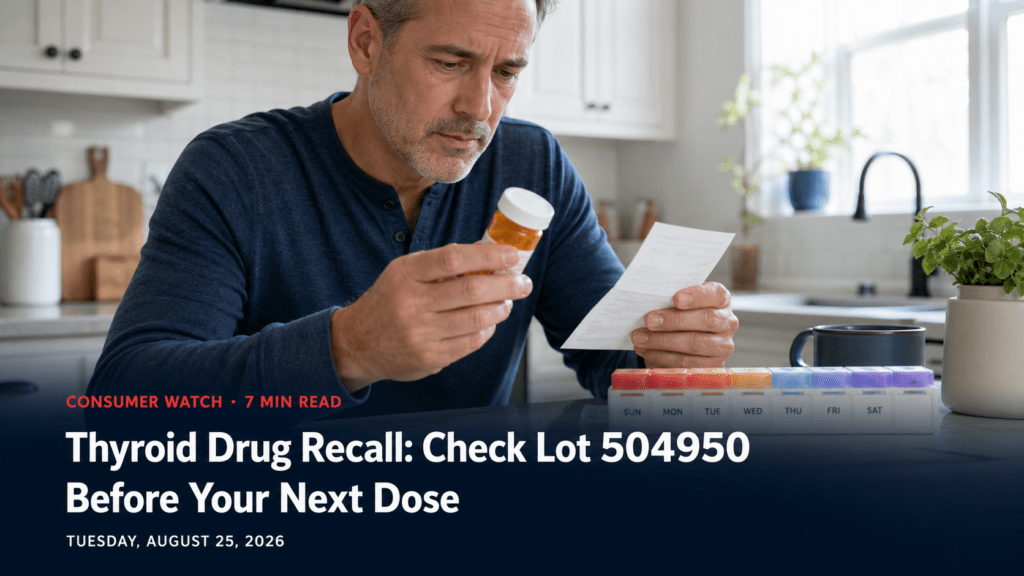
A nationwide recall covers one specific lot of 30 mg thyroid tablets because testing found the medicine may be stronger than intended. Patients should check the lot number now—but should not stop taking the medication without first speaking with a healthcare professional.
The Bottom Line
Vitruvias Therapeutics is recalling Thyroid Tablets, USP 30 mg, lot 504950, with an expiration date of September 30, 2026. The FDA-posted announcement says the product may be superpotent. Check the label or pharmacy container, contact your pharmacist or prescriber if the lot matches, and do not discontinue thyroid medicine on your own. The company reported no adverse events known to be related to the recall as of its announcement.
Exactly which medicine is affected
The recall is narrow: it applies to one lot of Vitruvias Therapeutics Thyroid Tablets, USP 30 mg. The product is a natural preparation derived from porcine thyroid glands and contains the thyroid hormones levothyroxine and liothyronine. It is used to treat hypothyroidism, commonly called an underactive thyroid.
The company initiated the consumer-level recall after testing confirmed the potential for excess potency. According to the announcement posted by the Food and Drug Administration on August 24, 3,655 units were released and 1,955 were sold. The lot was distributed nationwide to the company’s direct accounts between January 31 and September 30, 2025.
| Label field | Recalled product |
|---|---|
| Product | Thyroid Tablets, USP 30 mg |
| NDC | 69680-166-00 |
| Lot | 504950 |
| Expiration | September 30, 2026 |
| Distribution | Nationwide |
Why too much thyroid hormone matters
A superpotent tablet can expose a patient to more thyroid hormone than the prescribed dose. The recall announcement says possible effects can include weight loss, heat intolerance, fatigue, nervousness, muscle weakness, high blood pressure, chest pain, rapid heart rate or heart-rhythm disturbances.
Those symptoms are not proof that a person received a recalled bottle, and several can have other causes. The relevant first step is to verify the product, strength, lot number and expiration date. Anyone experiencing chest pain, a rapid or irregular heartbeat, fainting, severe shortness of breath or another urgent symptom should seek immediate medical help.
The company identifies older adults, pregnant women and infants as groups at greater risk, particularly with extended exposure. Excess thyroid hormone in older patients can be especially concerning for cardiac health. In pregnancy, overtreatment has been associated with maternal and fetal complications. In infants, excessive dosing can affect growth and development.
Do not stop the medicine without guidance
The central safety instruction is easy to miss in a recall headline: the company says patients taking tablets from lot 504950 should not discontinue use without contacting their healthcare provider for guidance or a replacement prescription.
Thyroid replacement is often taken daily and dosage changes can affect how a patient feels and functions. Abruptly stopping treatment may allow hypothyroid symptoms to return and may create additional risk for some patients. A pharmacist can help identify the dispensed product and lot, while the prescribing clinician can decide whether a replacement, dose adjustment or laboratory test is appropriate.
Three practical checks
1. Inspect the pharmacy label and original container
Look for the product name, 30 mg strength, NDC 69680-166-00, lot 504950 and the September 30, 2026 expiration date. If your pharmacy repackaged tablets into a standard amber bottle and the manufacturer’s lot is not shown, call the pharmacy that dispensed it.
2. Ask a specific question
Give the pharmacist the exact NDC and lot number rather than asking only whether “thyroid medicine” was recalled. Confirm whether your tablets came from the affected lot and ask how a replacement will be handled.
3. Preserve useful information
Keep the bottle, label and receipt until the pharmacy or clinician advises what to do. Note any recent symptoms and the dates they occurred. Do not give the medication to another person or dispose of it before receiving instructions.
Who to contact
- Your pharmacy: to identify the manufacturer and lot and arrange any replacement process.
- Your prescriber: for advice about continuing treatment, replacement dosing or laboratory testing.
- Vitruvias Therapeutics: safety@vitruvias.com or (256) 239-9373, Monday through Friday, 9 a.m. to 5 p.m. Central.
- FDA MedWatch: for reporting a suspected adverse reaction or quality problem through the official MedWatch reporting page.
What to Watch
Watch for direct communication from your pharmacy, prescriber or the manufacturer and for any FDA update that changes the recall’s classification, scope or instructions. Patients who receive a replacement should verify the new bottle’s product, strength and lot before leaving the pharmacy.
Sources and Methodology
This report is based on the FDA-posted company recall announcement published August 24, 2026, and the FDA’s consumer guide, Understanding Drug Recalls: What to Know and What to Do. FDA posts company announcements as a public service and does not endorse the product or company.
Read Also
Powdered Milk Recall: How to Check the Product List and Protect Your Household
Health Information Notice: This article provides general information and does not replace medical advice. Do not start, stop or change prescription medication without guidance from a qualified healthcare professional. Seek emergency care for urgent symptoms.


