
Upstart sports leagues have a pretty bleak history in the United States.
A number of leagues, for example, have tried to take on the National Football League (NFL). Most famously, the USFL operated from 1983 to 1986 before closing down, and that has served as the inspiration for multiple other spring football leagues to attempt to establish a foothold.
It’s a market littered with failures. Multiple versions of the USFL have failed, as have two different versions of Vince McMahon’s XFL, along with something called the AAF.
“Even though each league failed financially for different reasons, the lesson is the same: the market for a start-up alternative football league is opportunistic, but unforgiving. There’s not a lot that needs to go wrong for these leagues to falter, but a lot does need to go right,” according to CBS News.
Alternative football leagues are not unique in their struggles. It’s generally incredibly hard to take on an incumbent in any sport.
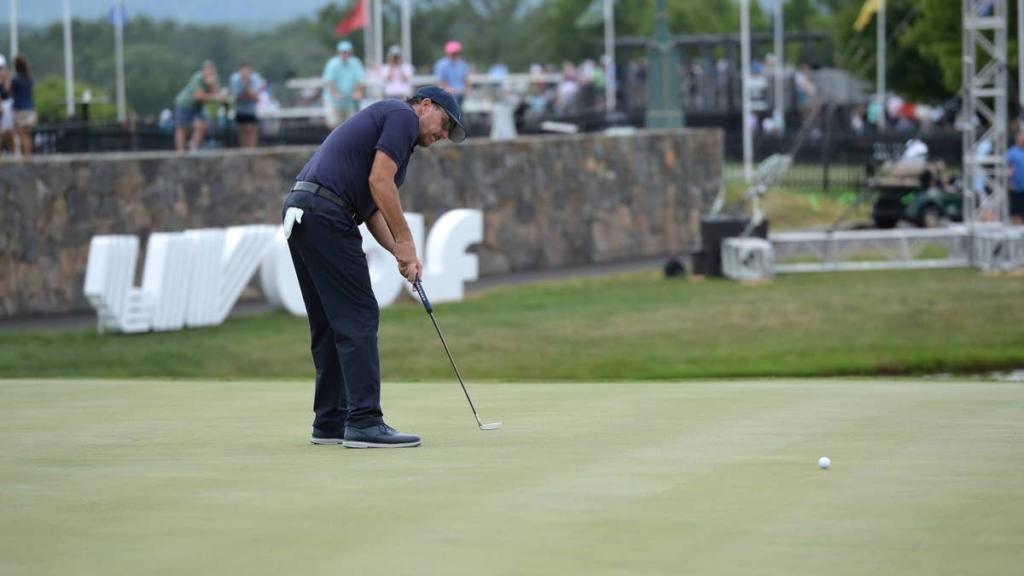
That’s a lesson Liv Golf, an effort to take on the PGA, has learned the hard way after going through billions of dollars in funding. The upstart golf league, which once seemed like it would overtake the incumbent, finds itself on the verge of a Chapter 11 bankruptcy filing.
Liv Golf once seemed like a true challenger
While some people hoped they might become viable secondary leagues, few, if any, people believed that any of the spring football leagues would supplant the NFL. The same can be said for the Big 3, an attempt by rapper Ice Cube to take on the NBA.
LIV Golf, however, was different than any other secondary sports league because it had backing from Saudi Arabia’s Public Investment Fund (PIF). Back when LIV was announced, PGA Tour Commissioner Jay Monahan essentially conceded defeat.
More Bankruptcy:
- Key gasoline and jet fuel distributor files Chapter 11 bankruptcy
- 66-year-old burger chain franchisee files Chapter 11 bankruptcy
- National phone carrier shuts down after Chapter 11
“As I also said to the players, let me be clear: I am not naive,” Monahan said. “If this is an arms race and if the only weapons here are dollar bills, the PGA Tour can’t compete. The PGA Tour, an American institution, can’t compete with a foreign monarchy that is spending billions of dollars in an attempt to buy the game of golf.”
At the time, he was concerned that the Saudi PIF investment would give the new league unlimited resources.
“We welcome good, healthy competition. The LIV Saudi Golf League is not that. It’s an irrational threat, one not concerned with the return on investment or true growth of the game,” he added.
The Saudi money allowed LIV to sign a number of golfers away from the PGA, including Jon Rahm, who signed a $300 million contract, Phil Mickelson, Bryson DeChambeau, and Brooks Koepka, who later made a deal to return to the PGA.
The Saudi PIF invested $5 billion in LIV Golf, making it a viable player, but earlier this year, it ended that investment.
Saudi’s PIF pulls its LIV Golf investment
It was announced in April that LIV would lose its funding from the Saudi Arabia Public Investment Fund, which had bankrolled the league from its inaugural season in 2022 and was thought to be funding it through 2032, according to Forbes.
The move made sense based on LIV’s failure to attract a major television deal, but it was shocking, given the contracts signed by many of the players who defected from the PGA. Without the Saudi PIF funding, LIV’s future was immediately in doubt.
“The league has struggled to gain consistent traction with traditional golf audiences while burning through billions of dollars in its bid to challenge the PGA Tour’s dominance. Even if LIV succeeds in securing new investment, the circuit is expected to look far different from the free-spending disrupter that upended the sport and cleaved men’s professional golf in two,” according to The Washington Post.
The Saudi PIF’s total investment is projected to surpass $6 billion, according to figures from Money in Sport, with the PIF spending at a rate of roughly $100 million per month in recent years.
“Tournament purses and bonuses alone are expected to approach $2 billion, while many top players received nine-figure signing deals. LIV’s U.K.-based entity reported losses of $461.8 million in 2024, and the overall venture was widely viewed as losing hundreds of millions annually,” the Post reported.
Shutterstock
LIV Golf faces Chapter 11 bankruptcy
LIV Golf’s new management has been trying to make a new funding deal to keep the league afloat, but Chapter 11 bankruptcy remains an option.
“While LIV’s management and advisers are looking for options, including trying to find investors, they are preparing for the league’s collapse when the season ends in late August as a possible outcome, said the people, who asked not to be named discussing private information,” Bloomberg reported.
A spokesperson for LIV declined to comment to Bloomberg.
LIV Golf has publicly denied that a Chapter 11 bankruptcy filing is being considered.
Representatives for Gibson Dunn & Crutcher and investment bank Ducera Partners, both hired by LIV earlier this month to help find new investors, also didn’t immediately respond to a request for comment.
The golf league is still seeking new funding.
“We have to create a plan that’s a business plan — a business that works from a business standpoint, from a profit and loss standpoint,” LIV Golf Chief Executive Officer Scott O’Neil said at a press conference at the Virginia LIV event. “We are well on our way to that.”
LIV Golf has not given up
While LIV Golf has not lived up to its initial financial expectations, the league has reorganized its management to try to save itself.
“LIV Golf has built something truly differentiated — a global league with passionate fans, world-class talent, and demonstrated commercial momentum,” Gene Davis, chairman of the Independent Directors Committee, said in a press release.
“The executive leadership team, along with Jon and I, see a clear opportunity to help the league formalize its structure, attract and secure long-term capital, and position the business for growth while continuing to promote the game across the world. We look forward to positioning LIV Golf for future success.”
Any efforts to remain afloat may depend on the golfers the league has signed to big-money contracts.
“The league is also reportedly restructuring its contracts and heavy debt load, with players being offered equity in a reorganized ‘LIV Golf 2.0.’ At the center of that financial uncertainty is Jon Rahm,” Davis said, according to Essentially Sports.
His willingness to swap salary for equity may be the key to LIV Golf finding a path forward.
“Jon Rahm is the biggest factor in this,” Flushing It Golf wrote in an X post. “It is estimated he is still owed 9 figures for his deal signed ahead of the 2024 season that still has multiple years left. This would likely make Jon the biggest creditor should LIV Golf file for bankruptcy. “
Jon refused to guarantee he will play on LIV Golf in 2027 when asked directly in a press conference at LIV Golf U.K., and he has an enormous role in deciding the future of the league both on and off the course.
Related: Defunct iconic tire brand files Chapter 11 bankruptcy to dissolve


