
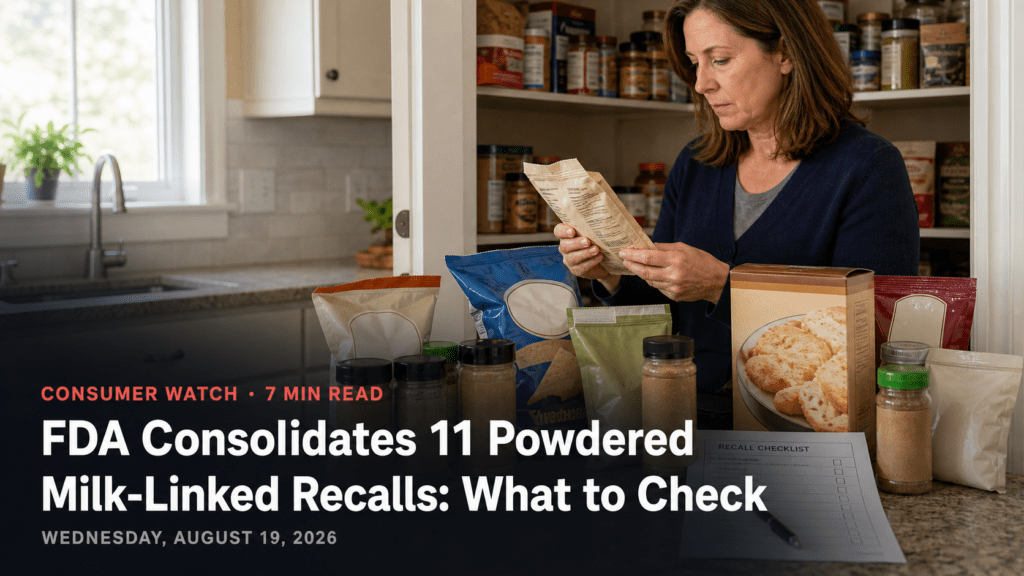
The FDA has created a single major-recall page linking 11 downstream recalls tied to powdered milk from California Dairies Inc. The individual notices were issued from late April through May; the practical update is that households now have one official list for checking snacks, seasonings, beverage mixes and cheese bread that may still be stored at home.
The Bottom Line
Do not discard every product in these broad categories. Check the exact brand, product name, package size, lot code and best-by date against the linked FDA notices. If all identifiers match, stop using the product and follow that company’s return or disposal instructions. The FDA’s consolidated page does not report a new outbreak; it organizes recalls that flowed from a bulk powdered-milk recall announced April 20.
What the FDA added
The Food and Drug Administration now classifies the California Dairies matter as a major product recall with significant downstream effects. FDA says its major-recall hub is used for events that typically involve five or more related actions. This page gathers 11 notices from companies that either used the recalled powdered milk as an ingredient or repackaged affected material.
The source event began when California Dairies Inc. recalled bulk powdered milk and buttermilk distributed to wholesale customers and manufacturers. The downstream notices span April 28 through May 29. That timeline matters: the page is newly consolidated, but the underlying consumer actions are not newly announced on August 19. Long shelf lives, however, mean affected packages can still be in pantries, home bars, offices or restaurant storage.
The 11 product groups to check
| Brand or company | Product type | Announcement |
|---|---|---|
| Angel Specialty Products, Royal Gold, Boba Time, Fanale, Denda | Specialty beverage powders | May 22 |
| Ghirardelli | Powdered beverage mixes | April 28 |
| Zapp’s, Dirty | Potato chips | May 4 |
| Pork King Good | Pork rinds and seasonings | May 5 |
| Fisher, Southern Style Nuts, Squirrel Brand, Good & Gather | Snack mixes | May 6 |
| Stoltzfus Family Dairy | Sour cream and onion cheese curds | May 7 |
| Wildlife Seasoning | Flavored popcorn seasoning | May 7 |
| Giant Eagle | Parmesan, garlic and herb chips | May 7 |
| Williams Sonoma, Fireworks Popcorn | White cheddar seasoning | May 8 |
| Blackstone | Parmesan ranch seasoning | May 16 |
| Motor City Pizza Co. | Cheese bread, single and two-packs | May 29 |
This is a category-level map, not a substitute for the detailed notices. Several brands sold multiple flavors, sizes and lots, while unaffected products can share the same brand. For example, FDA’s Ghirardelli notice lists specific food-service and bulk beverage mixes with particular lot numbers and best-by dates. Some were intended for commercial customers but may also have been sold to consumers through e-commerce. The SKS Copack notice similarly identifies individual item codes, lot codes and dates across multiple specialty-drink brands.
A five-minute pantry check
- Start with durable foods. Focus on powdered drink mixes, seasonings, snack mixes, chips, pork rinds and frozen cheese bread that could have been purchased before June.
- Photograph the label. Capture the product name, net weight, UPC, lot code and best-by date before moving or discarding the package.
- Use the FDA hub. Open the notice for the matching brand and compare every identifier—not only the product name.
- Separate a possible match. Place it where no one will eat or serve it while you confirm the details.
- Follow the company-specific remedy. Instructions and contact numbers differ. Save receipts or order history if available.
Why matching the lot matters
A brand-level purge wastes food and can create confusion. A precise comparison gives the household a documented answer and preserves the package information needed for a refund, a company call or a health inquiry.
What the health risk means
Salmonella can cause fever, diarrhea, nausea, vomiting and abdominal pain. CDC says anyone can become infected, while children under 5, adults 65 and older, adults 50 and older with underlying medical conditions, and people with weakened immune systems face a higher risk of infection or serious illness.
A product match does not establish that anyone was exposed or will become ill. Likewise, the consolidated FDA page does not itself state that every downstream notice has reported illnesses. The linked Ghirardelli and SKS Copack announcements each said no illnesses had been reported when those notices were issued. Consumers with symptoms or concerns about a vulnerable family member should contact a healthcare professional and mention the suspected food exposure.
What to watch next
- Whether FDA adds more downstream companies or products to the consolidated list.
- Whether an individual company changes its lot list, distribution details or consumer remedy.
- Whether public-health agencies connect any illnesses to a specific product. At publication, that connection was not established by the FDA hub.
Why one ingredient creates a long recall chain
A bulk ingredient can move through several layers before reaching a household. A dairy processor sells powder to manufacturers; those manufacturers blend it into drink bases, seasoning mixes or prepared foods; distributors and retailers then sell the finished products under several brands. One supplier action can therefore produce many separate notices with different package formats, distribution areas and remedies.
That structure also explains why FDA’s consolidated page is more useful than a single brand notice. It gives consumers a top-level map while preserving the detailed lot tables maintained by each downstream company. It does not mean every item made with powdered milk is affected, nor does it mean every package from a listed company used the recalled ingredient.
How to read a recall notice without overreacting
Begin with identity, not symptoms. Confirm the brand and exact product, then compare package size, UPC or item code, lot code and date. Next, read the distribution section: some notices cover particular states, commercial customers or online channels. Finally, read the remedy and contact section because refund, return and disposal steps can differ.
If a package has already been discarded, an online order record, store receipt or photograph may still help establish what was purchased. If the label does not match every required identifier, keep the official notice and check again if FDA or the company updates it. This method separates a confirmed match from a precautionary possibility and helps households act quickly without throwing away unrelated food.
Sources and methodology
American Media Press reviewed the FDA’s consolidated major-recall page, the linked Ghirardelli notice, the SKS Copack notice and CDC’s Salmonella guidance. Product categories and dates in the table are drawn from FDA’s hub; consumers should use the linked company notice for exact identifiers and remedies.


